AQ Forensics at the United Nations: Why Blockchain Forensics Is Becoming Decisive in the Fight Against Human Trafficking and Crypto Financial Flows
International experts at „Tech Against Trafficking II“ discussed stablecoins, unlicensed cash-for-crypto infrastructure, blockchain forensics and new challenges for investigative authorities, companies and compliance officers.
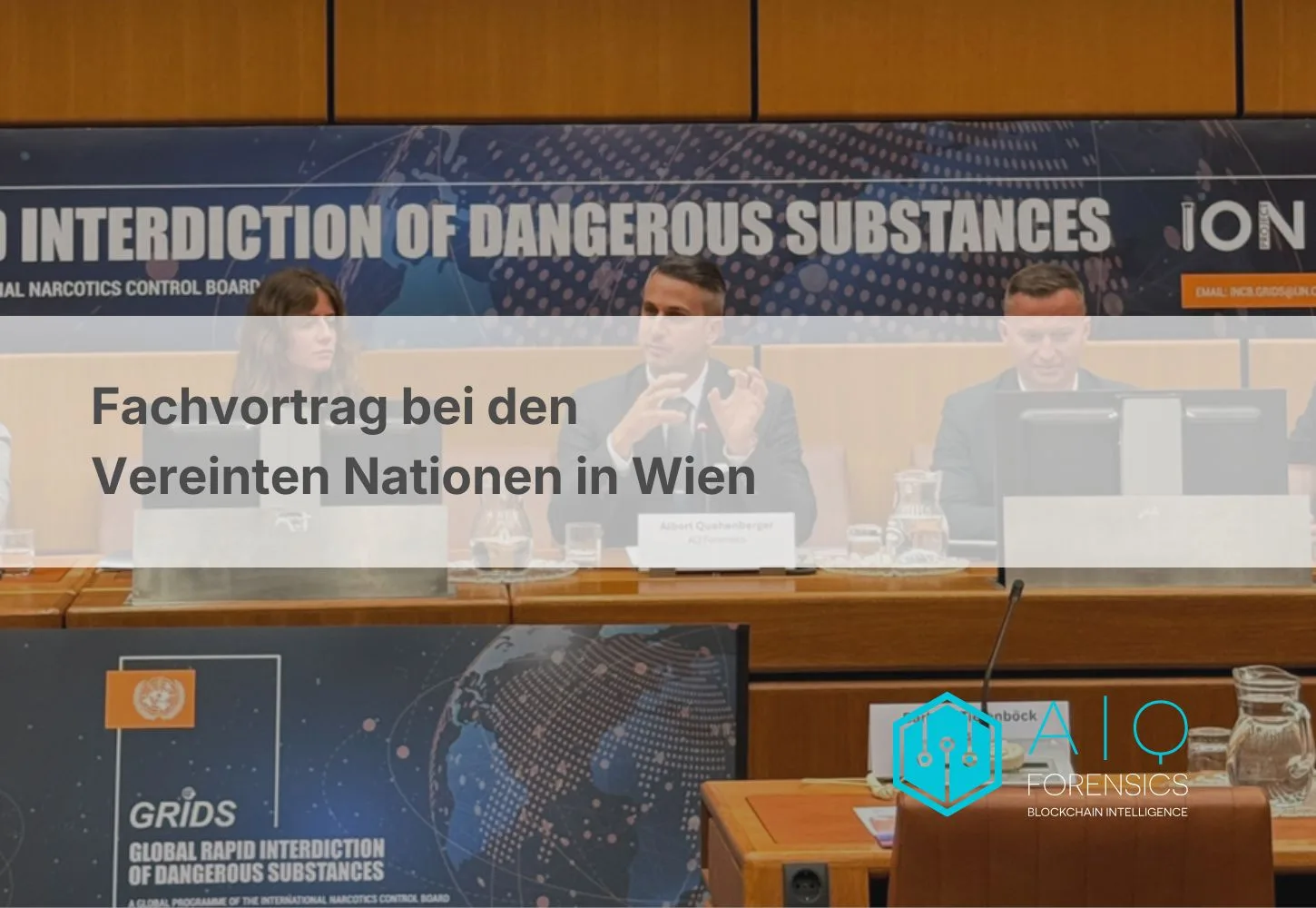
From 21 to 24 October 2025, the second edition of Tech Against Trafficking took place at the Vienna International Centre in Vienna, a specialist format organised by the United Nations International Narcotics Control Board (INCB) within the Global Rapid Interdiction of Dangerous Substances Programme (GRIDS).
The focus was on technological developments that increasingly confront investigative authorities worldwide with new challenges: digital payment services, virtual assets, stablecoins, platform economies and the growing connection between organised crime, cybercrime and human trafficking.
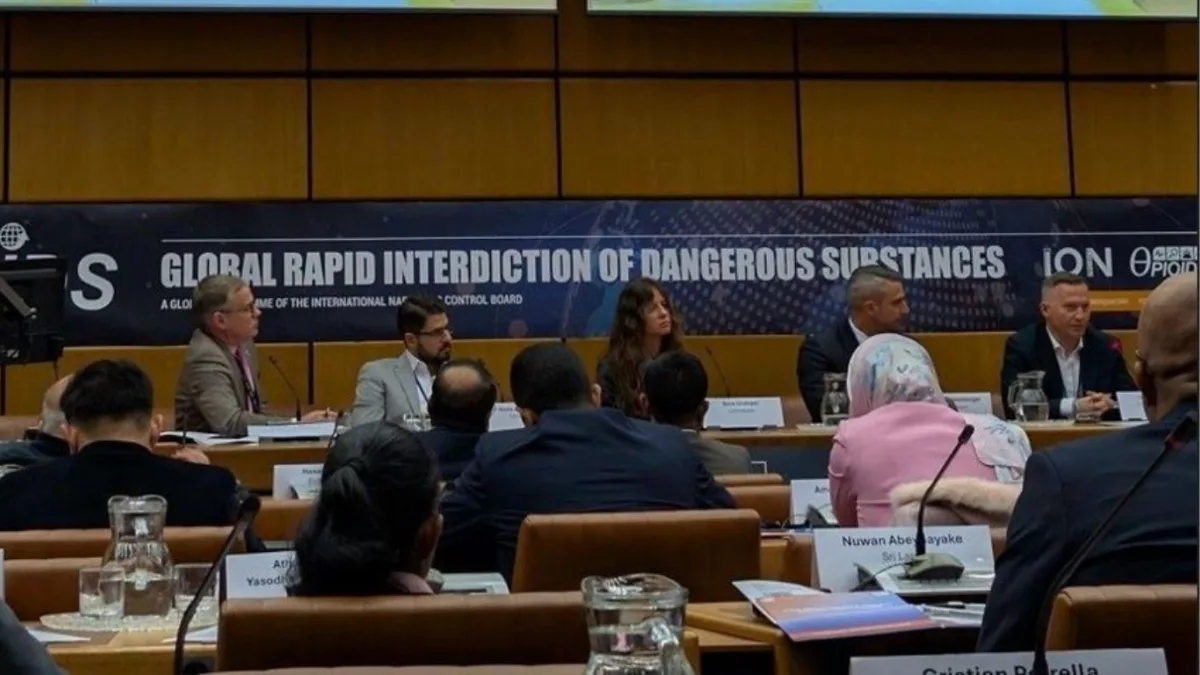
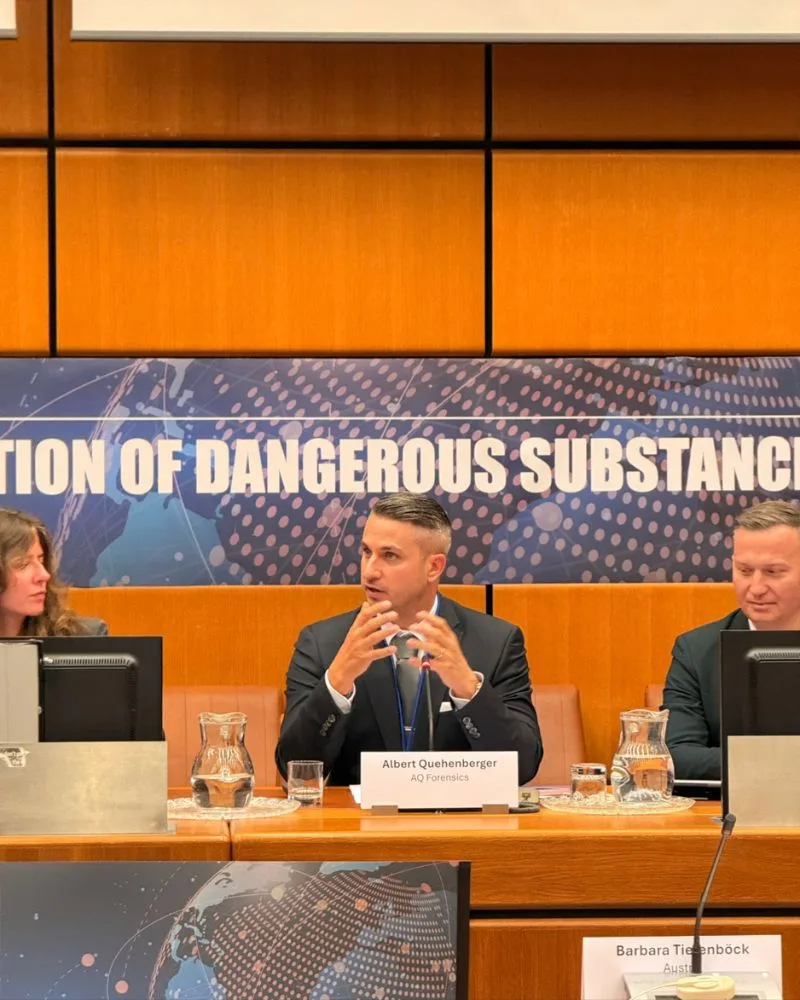
AQ Forensics was represented by Albert Quehenberger, Co-Founder and CEO of AQ Forensics GmbH, who gave a specialist presentation as part of the panel „Payment Services, Virtual Currencies and Stablecoin Threats“.
The panel also brought together international experts from TRM Labs, Chainalysis, Crystal Intelligence and PayPal. The discussion was moderated by Matthew Nice of the INCB GRIDS Programme.
Why this panel mattered internationally
The event brought together representatives of international organisations, blockchain analytics companies, payment service providers and investigative authorities to discuss current developments in digital financial crime.
At the centre were questions that are becoming increasingly important for law enforcement agencies, compliance departments, crypto exchanges and companies worldwide: How are stablecoins changing international money flows? What role do unlicensed cash-for-crypto service providers play? Where are the limits of conventional blockchain analysis? And how can public and private actors further improve their cooperation?
It was precisely this interdisciplinary perspective that made the panel one of the event's most relevant programme items from a professional standpoint.
The central insight: crypto risks often begin before the blockchain
A particularly relevant finding from the context of the event: 97 percent of the funds from unlicensed cash-for-crypto infrastructure ultimately flow to large international exchanges.
The problem with this: by the time these funds arrive on the blockchain at large platforms, they often already appear inconspicuous. The actual risk factors frequently lie upstream: physical cash desks, unlicensed exchange offices, local intermediary networks, possible sanctions links, connections to human trafficking or other off-chain structures.
This creates a decisive gap for conventional blockchain analytics. On-chain data shows transactions, wallets, amounts and timestamps. What it does not automatically show is which physical infrastructure, which individuals or which criminal networks stand behind a deposit.
This very gap was a core point of the contribution by AQ Forensics.
Why conventional blockchain analysis alone is not enough
Blockchain transactions are technically traceable. Modern financial crime, however, does not move exclusively on the blockchain. It combines on-chain and off-chain elements: bank accounts, money mules, cash desks, messenger groups, recruitment ads, fake jobs, exchange accounts, stablecoin flows and DeFi protocols.
In the AQ Forensics presentation, this connection was illustrated using modern case logic: a fraud case can begin in Austria, run through a bank account in Germany, be passed on by a supposed employee or money mule, be converted into stablecoins at an exchange and then moved to other regions via DeFi protocols.
Individual authorities, platforms or service providers often see only a fraction of this. The actual evidence therefore does not emerge from a single transaction, but from the reconstruction of patterns.
„In modern blockchain investigations it is not the individual transaction alone that is decisive – what matters is the pattern.“
Human trafficking as part of modern fraud infrastructure
A particularly sensitive topic of the event was the connection between human trafficking and digital financial crime. In this context, human trafficking does not appear solely as a separate offence. In some cases, exploitation itself becomes part of the fraud logistics.
International investigations have shown for years that people can be forced into fraudulent call centre, scam or payment networks. These structures use digital payment systems, stablecoins and cryptocurrencies to move funds quickly, across borders and in ways that are hard to trace.
This creates new requirements for investigations:
- Suspicious wallets have to be reconstructed.
- Payment flows have to be traced across different blockchains and platforms.
- Exchange interfaces have to be identified.
- At the same time, off-chain indicators such as recruitment patterns, device links, communication structures or local payment infrastructure have to be included in the assessment.
It is precisely in this interplay that operational blockchain forensics shows its true added value.
Cash-for-crypto services as a blind spot
Another focus of the event was unlicensed cash-for-crypto infrastructure. According to the findings presented, around 7.4 billion US dollars were processed worldwide through cash desk structures in 2024. Around 33 percent of this activity was attributable to unlicensed exchanges.
Such services present particular challenges for investigative authorities and compliance teams. The on-chain transaction frequently shows no more than the inflow to a known platform. Which infrastructure, which individuals or which networks were involved beforehand often remains hidden without additional information.
This is precisely where risks arise for large international exchanges, financial service providers and companies with AML responsibility. Where assets from problematic physical infrastructure reach regulated platforms, a purely transaction-based view is frequently no longer sufficient. What is required is a forensic assessment that connects on-chain traces with off-chain context.
The role of operational blockchain forensics
AQ Forensics is not a pure software provider. The company works operationally on the reconstruction of complex crypto matters: transaction analysis, wallet clustering, exchange identification, pattern recognition, evidence preservation and forensic preparation.
In international cases in particular, this operational perspective is decisive. Analytics platforms deliver valuable leads. The actual investigative work, however, consists of assessing this information professionally, distinguishing between assumption and robust proof, and documenting the results in a comprehensible way.
At Tech Against Trafficking II, the subject was therefore not solely technical analysis, but forensic operational capability:
- How can authorities, companies and platforms identify risk structures more quickly?
- How can the gap between on-chain transactions and real-world infrastructure be closed?
- How can international cooperation be improved when a case spans several jurisdictions, platforms and payment systems?
Why this is relevant for companies and exchanges
The findings from the UN format do not concern law enforcement agencies alone. They are equally highly relevant for companies, crypto exchanges, payment service providers, law firms and compliance officers.
Where assets from unlicensed cash-for-crypto infrastructure reach large trading platforms, this can give rise to risks in connection with sanctions, money laundering, human trafficking or fraud structures that are not initially apparent from a purely on-chain perspective.
For companies this means that compliance processes should not rely exclusively on obvious wallet risks. What is decisive is rather the ability to reconstruct complex payment flows, assess origin risks and identify suspicious patterns at an early stage.
For law firms this means that legal steps become considerably more robust when the technical and forensic basis is documented in a comprehensible way.
For investigative authorities it means that international proceedings increasingly require structured analytical documentation that is understandable and usable across national and institutional boundaries.
International cooperation as the key
A recurring theme of the event was the importance of public-private partnerships. No single actor holds all the information in a case.
Authorities hold sovereign powers. Crypto exchanges and payment service providers hold customer and platform data. Blockchain forensic specialists reconstruct transaction patterns. Analytics companies provide technical infrastructure. Law firms create the legal framework.
Effective investigations arise where these competences are brought together in a structured way.
AQ Forensics sees itself at exactly this interface: as an operational blockchain forensics partner for companies, law firms, crypto exchanges, authorities and institutional market participants. Not as a substitute for law enforcement or legal advice, but as the professional basis for robust further steps.
Crypto crime requires swift, coordinated action.
AQ Forensics supports in handling complex crypto incidents – from blockchain forensics and operational incident response to securing and recovering digital assets.
In context
The participation of AQ Forensics in Tech Against Trafficking II at the United Nations illustrates a development that affects international investigative authorities, companies and compliance departments alike: blockchain forensics is increasingly becoming an indispensable part of modern financial, fraud and human trafficking investigations.
The blockchain provides valuable traces. It does not, however, tell the whole story.
Particularly with unlicensed cash-for-crypto infrastructure, stablecoin payment flows, DeFi protocols and internationally organised financial crime, it becomes clear that robust investigations require a combination of on-chain data, off-chain context and operational analysis.
At the same time, the event made clear that the future of successful blockchain investigations does not lie in powerful software alone. What is decisive is international cooperation, forensic methodology and the ability to reconstruct complex connections in a comprehensible way.
AQ Forensics supports companies, law firms, financial service providers and authorities with international blockchain investigations, wallet analyses, source-of-funds checks and complex compliance matters.
Über den Autor
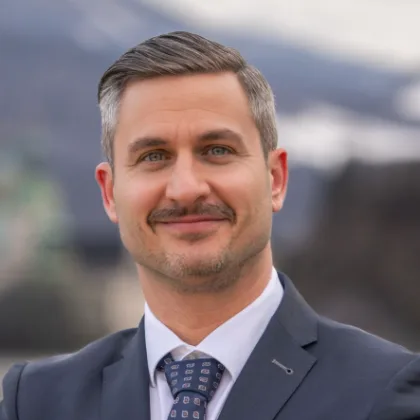
Albert Quehenberger is founder and managing director of AQ Forensics GmbH and a specialist in blockchain forensics, cryptocurrency investigations and digital asset analysis. With more than a decade of experience in intelligence, digital investigations and blockchain analysis, he supports companies, banks, lawyers, authorities and private individuals in investigating crypto fraud cases, asset tracing and analysing complex financial flows on public blockchains.
His career includes more than six years in military intelligence, a master's degree from the WU Executive Academy, specialist training for court-appointed experts and training as an election observer to OSCE/ODIHR standards. He is also a member of the expert council of the European Institute for Future Generations (EIFG), a ChangeNOW ambassador and an adviser for Web3 education programmes in Ethiopia.
Media & Further Links
- INCB GRIDS Official information on the INCB GRIDS Programme
- LinkedIn post by Crystal Intelligence on the event
More AQ ECOSYSTEM articles
- // AQ ECOSYSTEM 001 – AQ Forensics at the Cardano Summit 2025 in Berlin
- // AQ ECOSYSTEM 002 - TokenPay and AQ Forensics enter into a strategic partnership
- // AQ ECOSYSTEM 003 - AQ Forensics train cybercrime investigators in operational blockchain forensics