
Anatomy of a Wallet Hack
How a compromised email account became a trap for a Ledger user
The client contacted AQ Forensics after substantial XRP holdings had disappeared from his wallet. To him the cause seemed clear at first. His wallet must have been hacked. We hear this assumption regularly in our daily work. The cryptocurrencies are gone. The transactions were confirmed. The assets are sitting at unknown wallet addresses. For many victims the cause therefore appears to be settled already. Yet it is precisely at this point that the actual forensic work begins. Our experience from numerous international investigations shows that behind a supposed wallet hack there is frequently something entirely different.
Starting position of the case
In the case at hand, the client noticed the loss of his XRP holdings only after the assets had already been transferred to unknown wallets. From the perspective of the person affected, everything pointed to a classic wallet hack.
An investigation does not begin with assumptions, however. It begins with the question: what actually happened?
AQ Forensics therefore first analysed:
- the wallet history
- the transaction data
- known counterparties
- possible communication events
- technical anomalies
- potential points of attack
„The visible outflow of assets is frequently only the end of an attack that began considerably earlier.“
Anyone who has become the victim of a hacked wallet should secure wallet addresses, transaction hashes, communication data and relevant device information as early as possible. Blockchain forensics can help to document payment flows and perpetrator infrastructure in a comprehensible way.
If you are unsure whether you are affected, have your case examined discreetly. AQ Forensics supports victims with the analysis of international cryptocurrency fraud cases through blockchain forensics, wallet tracking and structured preservation of evidence.
What does a hacked wallet mean?
The term hacked wallet is used by many of those affected as soon as cryptocurrencies disappear. Technically, however, very different causes can lie behind it.
These include, among others:
- wallet drainers
- phishing attacks
- compromised email accounts
- stolen seed phrases
- malware
- counterfeit websites
- identity forgery
- social engineering
The outcome is frequently identical: the assets are gone. For investigators, however, the actual cause makes a considerable difference.
Why the blockchain tells only part of the story
The blockchain documents precisely where assets were transferred. It does not, however, automatically answer the question of why this was possible.
Professional blockchain forensics therefore does not confine itself to wallet addresses and transactions.
Just as relevant are:
- communication histories
- technical infrastructure
- device information
- login data
- email accounts
- website contacts
- social engineering patterns
Only the overall view produces a robust picture of the incident.
Not every wallet hack is a wallet drainer
Wallet drainers are today among the best-known attack tools in the crypto field. They are frequently manipulated smart contracts or fraudulent websites that induce users to give an apparently harmless signature.
Once approval is given, the perpetrators obtain far-reaching permissions. Assets can then be transferred automatically.
Despite how widespread they are, AQ Forensics regularly finds: not every supposed wallet hack was caused by a wallet drainer. Often the story begins considerably earlier.
The actual attack frequently begins weeks earlier
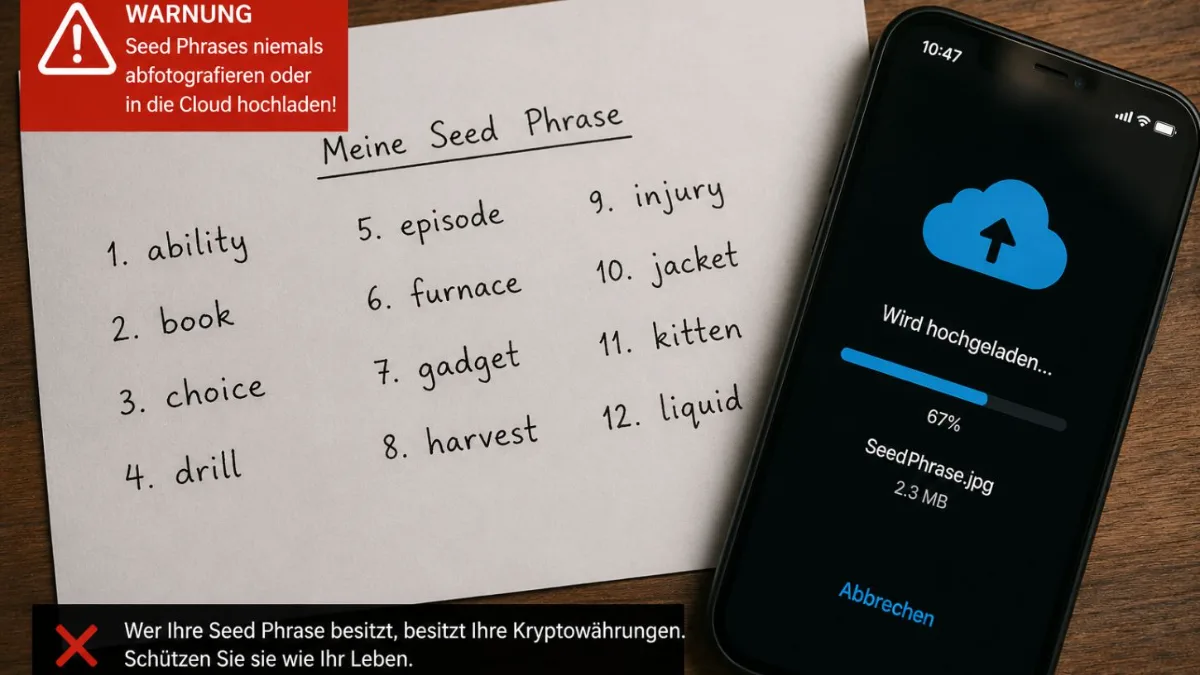
One finding runs through numerous investigations. The blockchain is often misused only at the end. The actual compromise frequently begins considerably earlier.
Examples are:
- compromised email accounts
- stored seed phrases
- counterfeit websites
- fraudulent support staff
- manipulated communication channels
- phishing messages
By the time the cryptocurrencies are finally transferred, the actual attack is often already complete. The outflow of assets is then merely the visible end point.
Further warning signs in cases involving hacked wallets
Many victims look for a single technical cause.
In practice, AQ Forensics frequently observes other patterns:
- a single email
- a phone call
- a text message
- a compromised mailbox
- a counterfeit support request
- a manipulated website
The blockchain is not hacked in the process. Frequently the wallet is not directly hacked either. The decisive attack is directed against the user's relationship of trust.
„In many cases it is not the wallet that is compromised. It is the person who is manipulated.“
Blockchain analysis and investigative approaches
In the course of an investigation, various levels of analysis are considered.
These include in particular:
- wallet history
- transaction chains
- recipient wallets
- wallet clusters
- exchange exposure
- token approvals
- smart contract interactions
- communication events
- technical access points
The aim is to identify the actual cause of the incident and not merely to trace the outflows.
Why root cause analysis is decisive
For investigators, crypto exchanges, banks and compliance departments it makes a considerable difference how assets were lost.
A wallet drainer leaves different traces from:
- a compromised email account
- a stolen private key
- malware
- an impersonation scam
- a phishing attack
The correct classification frequently determines which further measures make sense.
„The most important question is not where the cryptocurrencies flowed. The most important question is why they could be transferred at all.“
What those affected by an incident involving a hacked wallet should do
Where cryptocurrency theft is suspected, AQ Forensics recommends in particular:
- confirm no further signatures
- document wallet addresses
- secure transaction hashes
- review token approvals
- check email accounts
- archive communication data
- document suspicious websites
- check devices for compromise
- never pass on seed phrases
- commission professional blockchain forensics early
Securing digital traces early considerably improves the prospects of further investigations. If you already have a suspicion or have become a victim of crypto fraud, contact AQ Forensics for a professional analysis and the preservation of evidence of your transactions.
Have your case examined without obligation
We analyse your case confidentially and discuss together which measures and next steps are possible.
Closing remarks
The term hacked wallet frequently describes no more than the visible result of an attack that began considerably earlier. Experience from numerous blockchain forensic investigations shows that the actual cause is often not to be found on the blockchain itself.
Far more frequently, such incidents begin with phishing, social engineering, compromised email accounts or other forms of digital manipulation.
In the end, the blockchain merely documents the movement of assets. The task of professional blockchain forensics is to identify the actual cause, reconstruct the incident in a comprehensible way and create a robust basis for further technical, legal or official steps.
Über den Autor
Albert Quehenberger leads international investigations in the fields of cryptocurrency fraud, blockchain forensics and digital asset analysis.
His work focuses on the analysis of transnational scam infrastructure, wallet tracking, money laundering processes and the structured investigation of organised crypto crime.

Further cases from the AQ Fraud Intelligence Library
- // AQ FILES 001 – Anatomy of an international pig butchering fraud
- // AQ FILES 007 – Anatomy of an international crypto rug pull
- // AQ FILES 009 –Anatomy of a fraud with stolen cryptocurrencies